The body

The Body

A few weeks ago I explored the nature of the soul. Created by God at our conception (or at least, very close to our conception), the human soul is never created without the body (always created at the moment of conception).

This is the difference between us and angels. Angels are pure spirits. They never had and never will (as far as we know) have bodies. We do. We start life with our body, leave it upon our death and are reunited with our glorified bodies at the general resurrection.

Our resurrected body is “us,” not some different body. It is the natural “home” for our soul. It is not however, as it appeared at any point during our mortal life. There is much theology on this, but Catholic Answers apologist Father Vincent Serpa explains it succinctly:

The Church teaches that at the resurrection the bodies of the just will be re-modeled and transfigured to the pattern of the risen Christ. Like his body, our resurrected bodies will be those of a person in his prime. They will be incapable of suffering. They will have a spiritual nature – not that they will be pure spirit, but they will be like that of Jesus, who could penetrate closed doors after he had risen. They will have a new agility in that they will be able to obey the soul with great ease and speed – so that when the spirit is willing, the flesh will no longer be weak! Our bodies will be free from all deformity and will reflect God’s beauty to the degree that our souls do.

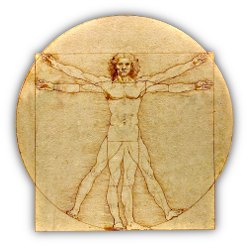
Our souls are unique and so is our body. Both are a gift from God. In our mortal state, each body has unique, lifelong DNA from the moment of conception. It is intertwined with and tightly united to our soul. It is the physical temple of the Holy Spirit, belonging to Christ and not our own to use or abuse however we please.

Proper respect for our body means we will care for it as best we are able (hygiene, healthcare, nutrition, exercise, etc.). Likewise, our body is not a sexual playground. We are to live modest, chaste lives – sharing the gift of our body with no one other than a spouse.

Finally, when our mortal body dies, dignity and respect must continue. It must be buried or interred within a mausoleum. Cremation is permissible, but under no circumstance may remains be scattered, turned into jewelry or the like.

The human body shares in the dignity of “the image of God”: it is a human body precisely because it is animated by a spiritual soul, and it is the whole human person that is intended to become, in the body of Christ, a temple of the Spirit:

Man, though made of body and soul, is a unity. Through his very bodily condition he sums up in himself the elements of the material world. Through him they are thus brought to their highest perfection and can raise their voice in praise freely given to the Creator. For this reason man may not despise his bodily life. Rather he is obliged to regard his body as good and to hold it in honor since God has created it and will raise it up on the last day.

CCC 364
Morality vs. law

Morality Vs Law

There was a time, long, long ago when morality and the law were generally synonymous. The law, particularly the 10 commandments as received by Moses, was accepted as the basis for all moral behavior.

Modern democracies were founded based upon God and recognition of His law. God is cited in the very first paragraph of the US Declaration of Independence. In the next paragraph, the core premise is presented. “We hold these truths to be self-evident, that all men are created equal, that they are endowed by their Creator with certain unalienable Rights, that among these are Life, Liberty and the pursuit of Happiness.” That is, explicit acknowledgment of the dignity of every person as given to them not by their government, but by God.

This was the culmination of our Christian religious beliefs from the very beginning:

  • 1565 – Spanish missions to Florida Indians began after the founding of St. Augustine, by Jesuits.
  • 1568 – Spanish missions to Georgia Indians comprised religious outposts established by Spanish Catholics.
  • 1620 – Mayflower Compact cited …”for the glory of God and the advancement of the Christian faith.”
  • 1639 – Fundamental Order of Connecticut cited …”where a people are gathered together, the Word of God requires that to maintain peace and union of such a people there shall be an orderly and decent government established to God…”
  • 1643 – the New England Confederation cited …”to advance the Kingdom of our Lord Jesus Christ and to enjoy the liberties of the Gospel.”
  • 1646 – the Massachusetts Bay Colony passed an act that prohibited people from denying that the Bible is the Word of God under penalty of death. They also imposed a fine for failing to attend church on Sunday.
  • 1649 – the Maryland Toleration Act cited “No person…   who professes to believe in Jesus Christ, shall from henceforth be any way troubled…” Anyone who spoke against the Virgin Mary could be fined and whipped.
  • 1683 – the Rhode Island Charter cited “We submit our person, lives and estates unto our Lord Jesus Christ…”

We have staked the whole of all our political institutions upon the capacity of mankind for self-government, upon the capacity of each and all of us to govern ourselves, to control ourselves, to sustain ourselves according to the Ten Commandments of God.

James Madison

Our founders were deeply religious and founded our country on their beliefs. 52 of the 55 framers of the Constitution were members of orthodox Christian churches. There was no “separation of church and state” in the sense of isolating the state from Judeo-Christian morality. That “separation of church and state” is not in the Declaration of Independence or the Constitution. The concept appeared in one of Jefferson’s letters and subsequently in the first amendment ONLY to restrict the government from forcing a specific religion (or form of Christianity) on the people. That the government itself should not be enlightened by religious beliefs appears absolutely nowhere.

It cannot be emphasized too strongly or too often that this great nation was founded not by religionists but by Christians, not on religions but on the Gospel of Jesus Christ.

Patrick Henry

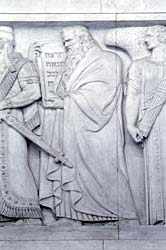
Our official motto is “In God we trust.” Our official pledge declares us to be “one nation, under God.” Our high court building includes Moses holding the 10 commandments on the stone facade, engraved into the huge oak doors and over the judges. Bible verses are etched in stone over many federal buildings and monuments. Our legal system itself traces its roots to Catholic canon law.

Americans should select and prefer Christians as their rulers.

John Jay, 1st Chief Justice of the Supreme Court

Today we are in decline. Our president repeatedly references the Declaration of Independence purposefully omitting “by their Creator.” The only Catholic president committed himself to making decisions completely isolated from his professed faith. Most people believe “separation of church and state” was a founding principle to keep religious morality out of government. The administration hides the 10 commandments at the supreme court. Numerous attacks on our motto and pledge are underway.

The shining light of a great Christian nation, abundantly blessed by God, has dimmed.

A good measure of how far we have fallen can be had by simply comparing the 10 commandments to current law. Every commandment of God may be legally broken. Let’s take a quick look, with some examples (I am sure that you will be able to think of many more):

1. You shall worship the Lord your God and Him only shall you serve.

Today we worship big government, our political ideologies, science, sports teams, unions, homosexuality, and ourselves. The legal and social support for these is strong. The legal and social support for God is only weakening under continuous attack. The effort to expunge Him and His will has never been stronger.

2. You shall not take the name of the Lord your God in vain.

Public obscenity laws reflected this commandment. To the extent they exist and are enforceable today, directly profaning our Lord is certainly excluded. A large segment of the population has embraced this sin as a routine part of their every-day speech.

3. Remember to keep holy the Lord’s day.

50 years ago most businesses were closed on Sunday. People went to church then spent time with their families. They rested. Most would not have wanted it any other way. Today, Sunday is indistinguishable for most from any other day.

4. Honor your father and your mother.

The law supported the family. No one thought that marriage could possibly be other than 1 man and 1 woman (not “honor your father and your other father”). Divorce wasn’t easy or no fault so people expected to stay with those they married. The law had not flourished to support “pre-marital agreements” anticipating the dissolution of the marriage before it even began. Parents were supported in how they raised their children. Children generally had a mother and a father and respected them.

5. You shall not kill.

Abortion.

6. You shall not commit adultery.

Once illegal, now considered perfectly OK. Anything goes between any consenting adults.

7. You shall not steal.

Still the law, but with many exceptions that are not considered “really stealing.” The law is often used by those skilled in it to legally acquire property by force. Financial manipulations abound to enrich some at the expense of others.

8. You shall not bear false witness against your neighbor.

Only restricted by law when it rises to the level of perjury, libel or slander. People routinely gossip (detraction) and have few qualms about promoting unfounded theories or just making things up (calumny).

9. You shall not covet your neighbor’s wife.

See commandment #6.

10. You shall not covet your neighbor’s goods.

The sin that was once called “keeping up with the Jone’s” has evolved into “entitlement” (at its root, forced redistribution of wealth). The government encourages this dependency, far from discouraging it in favor of the personal responsibility and hard work that built the country.

The law no longer serves as a guide to moral behavior. Being legal means only that one can not be prosecuted for an act, but the law is a very unreliable guide to morality. For that, we have only the Church.

There are no clocks in heaven

There Are No Clocks In Heaven

I am fascinated by time. Every moment in time is a permanent, fixed snapshot of the entire universe. In the next moment everything has changed (at least some). Time is relentless. Analogous to traveling in a car, we see where we are and can look back with certainty where we have been. We can look forward where we think we will be, but the further we look ahead, the greater the uncertainty.

As a child, I looked forward to holidays – particularly my birthday and Christmas. Time crawled as I anxiously awaited these days to arrive. They happened only once per year and in the framework of my short life, that was a very long time. Having now sailed through almost 5 decades, each year taking exactly as long as it used to, yet it sure doesn’t feel that way. The years fly by. It is like watching a wheel turn, slowly at first then faster and faster until it is just a blur.

Science fiction notions of stopping or traveling through time aside, the march of time is an immutable fact. It’s pace from the viewpoint of the observer is constant (even Einstein would agree). Time brings order and structure to our mortal lives.

God created time for our benefit. It is a canvas upon which we learn, grow and exercise our free will. It is an incubator for our soul.

God Himself is not subject to time any more than He is to anything else He created. God is completely outside of time. It is challenging for us to understand this, much as it is difficult for us to imagine our existence outside the physical world. These notions are contrary to our experience, yet we know for certain that mortal experience will end. It is just a matter of time…

For God, all moments of our time are current. There is no “past” or “future” as we know it. Among other things, this means that God knows our future. He knows the struggles we will face and the decisions we will make. He knows the hour and circumstance of our death. None of this is the “future” to God, but it is to us. This is not predestination. We live the struggle, exercise our free will, and determine our path. We are not God and the result is unknown to us.

Since God is outside of time, those in His presence are as well. Heaven is eternal for God and all who are with Him. Time does not exist there. Likewise, hell is also eternal and outside of time.

One heresy that has appeared at various points in the Church history, is the notion that souls in hell can be released and go to heaven. This error is often based upon sufficient punishment as merited by the sins of the damned, accumulation of prayers for the damned or repentance of the damned. In short, things which occur in (the non-existant) time. (The Catholic Encyclopedia explores the theology of this topic in Eternity of hell.)

Descriptions of heaven and hell have been offered as analogies by Jesus, Church Fathers, and theologians. These analogies are necessary to present the nature of these places to us in terms we can relate to. Likewise, purgatory has been described including “time in purgatory.” Unlike heaven and hell, souls in purgatory are transitional. All we know is that they are cleansed and released to heaven. The process and how “long it takes” is a mystery.

OK, mortal life is in time and immortal life is not. As earthly pilgrims enveloped by time, we are generally separated from the “other side” (except spiritually). There is one very notable exception: the Mass.

At every Mass we are joined to timeless heaven. Through the priest, Jesus himself confects the Holy Eucharist into His body, blood, soul and divinity. Not yet again, but at the Last Supper. We are present at Jesus sacrifice. Not yet again, but Calvary. We join with our Lord, the angels and saints. We are also united with each other at that Mass – and every Mass of the past, present and future. The mystery of Mass literally transcends our mortal world of time and space, giving us a taste of the heavenly kingdom!

The soul

The Soul

Lately, I have been thinking about my soul – that warm, fuzzy “thing” that is difficult to describe. I wanted to know the what, when, where and more. Exploring the specifics, not vague generalities.

What is the soul?

The Soul is an automobile manufactured by Kia. It is also a style of music, but I digress…

Quite simply, the soul is you. The real you, your mind, spirit and intellect. It is God’s image in you. Your soul is not your brain, your body, the clothes you wear, the music you listen to, the house you live in, the car you drive or your job.

When are souls created?

God created you / your soul (one and the same). God always was. We on the other hand, had a beginning. Biological “material” contributed by our parents was formed into a human life by God at our conception. Along with most folks, I believe that God created our soul at that same moment although the Church has not spoken on that infallibably.

The Catholic view of ensoulment has a long and complex history. Suffice to say, if ensoulment is not at the moment of conception, it is not very long thereafter. Moreover, unique human life is created at conception and killing that life is always a grave evil. On that point the Church has always been very clear.

Once created, our souls, children of God the Father, are immortal. After our relatively short mortal life, our souls remain for eternity in either heaven (possibly after cleansing in purgatory) or hell. We get to choose, but that choice must be made in our mortal lives.

Where is the soul?

Our souls unite with our physical bodies. Souls are not physical but are present and in control of our actions to the degree that our bodies are functional. Our brains operate the machinery of our bodies but make no “decisions” on their own other than to operate routine bodily functions. Brains are chemical and electrical elements that, together with the whole body, host the presence of the soul. When the soul leaves, the body stops functioning and dies. The beauty of every person is the presence of their soul, without which the object we see is only a (dead) body.

God created everything, but we are his greatest and most loved creation. We are our souls. Our bodies hold a special place as temples / arks / containers for the soul but it is the human soul itself that is unique, special and immortal. Even identical twins have fully distinct souls.

Our bodies can become less functional through damage or disease. Our souls may suffer but can not be harmed by this. Damage to our souls comes only through our free will choices that distance or separate us from God through sin.

A computer analogy.

For a computer to “be alive,” both hardware and software are necessary. The hardware, the physical computer itself, is what we can see, measure and touch. The software is the programming which brings it to life giving it characteristics and purpose. Without the software, the computer does nothing. Our bodies are like the hardware and our souls like the software.

Software, like our soul, is created at some point in time. It may evolve just as we evolve. Unified with its hardware body, software animates it. The computer would appear completely unchanged, but would be “dead” if the software were somehow removed from it. The software when removed from the computer, would still exist.

Near death experiences.

Many of you may disagree with me on this, but I do not believe for a moment that anyone can “die” and come back to life other than in heaven, purgatory or hell. Every now and then I catch a show on the on the Biography Channel called I Survived…   Beyond and Back. They describe it as “the extraordinary stories of people who have literally passed on to the other side.” No sale.

The stories recounted are of people who have suffered near death experiences, not *actual* death. I believe that their souls remained firmly united with their bodies throughout their ordeal. They mistake dreams (probably induced by extreme physical circumstances) of hovering above their bodies, dark tunnels ending in bright light or reuniting with grandma for reality.

I can think of only one special exception – private revelation. It is possible, but a huge stretch to fit the square experiences of near death into the round hole of private revelation. This seems very improbable to me.

Animals have souls too.

Concluding on this topic is Richard Geraghty who explains it well, and their relation to human souls, for EWTN:

One principle is that all living things have a soul. Here soul is defined as what makes an organic body live. Now when any living thing dies, its soul is separated from its body. In the case of plants and animals the soul goes out of existence. But in the case of man, the soul remains in existence because it is a spiritual or immaterial thing. Consequently, it differs from the souls of animals in two important respects. First, it is the seat of intelligence or reason. For this reason a man is held responsible for his actions in a way that animals are not. Secondly, the soul is immortal. A thing which has no physical parts cannot fall apart or be poisoned or be crushed or be put out of existence. For this reason the souls of the saved will always be aware of themselves as enjoying the vision of God for all eternity. This enjoyment will be the result of having chosen to act on earth in such a way that one did the will of God rather than one’s own will. And the souls of the damned will be aware of themselves as never attaining this vision of God because they have shown by their lives on earth that they did not wish this vision but instead preferred their own will.


Update: So, what then is the role of our body? See my later piece, The body.

New atheism

New Atheism

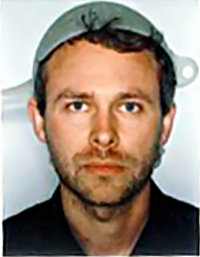
Those wacky atheists! They are always trying to top each other as to who is the most atheist among them. Recently, Austrian Niko Alm took his place in their virtual “hall of fame.”

Young Niko apparently wished to mock religion when he discovered that Austrian citizens are permitted to wear religious headgear for their ID photos. What an opportunity! The Church of the Flying Spaghetti (a favorite faux religion in atheist circles) would form the basis for the headgear he wanted to wear – a colander (pasta strainer). Niko waged a 3 year battle, including submitting to psychiatric examinations, before he was recognized officially as a Spaghetti Monster “pastafarian.” Congratulations Niko.

This young man is an example of the new atheism. Not only do they not believe, they feel called to work fervently in mocking the belief of those who do. Their intelligence and intellect is very impressive – to each other.

Interestingly, Niko’s subterfuge was necessary as atheism itself does not usually qualify as a religion. It is after all a non-belief, that there is “no god” or other supernatural power. “New” atheists feel compelled to oppose religion by every means possible.

Ironically, their fervent efforts could be seen as a religion itself. Consider:

  • deity: human reason and science, essentially the worship of self
  • doctrine: “self” came to be through the happy coincidence of random, natural events
  • moral code: live and let live with a sprinkling of helping others (more reciprocity than morality)
  • worship: wherever 2 or more atheists are gathered to discuss among themselves how smart they are / how dumb are they who believe in a magical sky fairy
  • saints: they have saints who lived exemplary atheist lives, worthy of imitation
  • clergy: many, such as Richard Dawkins, Christopher Hitchens and Stephen Hawking
  • hymns: an example is John Lennon’s Imagine (this might also be their creed)
  • mission: government, not religion, and the separation of them

While their hearts appear to be closed tight, there are more converts than many people might assume. Sometimes, in their relentless study to prove the fallacy of the Church, they unexpectedly find truth. C. S. Lewis is one famous example of a Christian convert.

Jennifer Fulwiler converted from atheism to Catholicism and is also a popular blogger. Some of her pieces on this topic are How I researched my way into Christianity, Love and conversion, On having proof and Why I’m Catholic.

Jennifer is but one of several atheism to Catholicism bloggers listed in my Convert Stories database. Others include Julie Davis, Devin Rose (story here), Elizabeth Mahlou, Jeffrey Miller, Sarah Reinhard and Kayla Garry. Each is a unique, good read.

show