Catholic from the beginning

Catholic From The Beginning

One of the most bizarre positions I have ever heard is that Catholics are not Christians. Fortunately, it is a minority viewpoint but it shows just how extreme some in the Protestant schism have gone.

Our Holy Father would put this much better, but the hard truth is this: the Catholic Church IS the Christian Church and has been since our Lord Jesus Christ instituted it. Protestants are not outside of that Church but part of it, although sadly not in full communion. Yes, Protestants are partially Catholic and upon that rests their salvation.

Christianity = Catholicism. Catholicism = Christianity. This is the Church of the Apostles. The early Church Fathers (after 100) would have identified themselves as Catholic, not followers of various heresies that have long since died out. The beliefs they had in the real presence in the Eucharist, our form of liturgical worship in the Mass, the Communion of Saints, veneration of Mary the Mother of God, Sacred Tradition, apostolic succession, the offices of deacon / priest / bishop, the primacy of Peter, sacraments, opposition to abortion and homosexuality, marriage for life and much, much more all remain in the Catholic Church today. Whereas in the various Protestant communities, supposedly (and ironically) founded to remove corruption, many of these ancient beliefs are gone.

Many Protestants identify with the Church Fathers but have a fuzzy concept of the Church in their time and their beliefs. The early Church Fathers were not Anglicans, Baptists, Lutherans, Methodists, Presbyterians, etc. After all, these communities (with different beliefs from each other) did not exist until over a millennia later (after the first 3/4 of Christian history).

Look at the timeline below. It is just the first 400 years in the history of the Catholic Church, a/k/a Christianity.

  • 0 – Christmas. The word is derived from Middle English Christemasse and Old English Cristes mæsse; Cristes is from Greek Christos (“Christ”) and masse from Latin missa (“holy mass”). Christmas literally means “Crist’s Mass.”
  • 33 – The Last Supper (the first Holy Eucharist) followed by the death and resurrection of our Lord.
  • 51 – The Council of Jerusalem.
  • 67 – Martyrdom of St. Peter, the first pope. St. Linus succeeds him as the second pope.
  • 69 – Fall of Jerusalem.
  • 76 – St. Anacletus (Cletus) becomes pope.
  • 88 – St. Clement I becomes pope. During his pontificate, he issues a letter to the Corinthians, urging them to submit themselves to lawful religious authority. He writes “Our apostles also knew, through our Lord Jesus Christ, and there would be strife on account of the office of the episcopate. For this reason, therefore, inasmuch as they had obtained a perfect fore-knowledge of this, they appointed those [ministers] already mentioned, and afterwards gave instructions, that when these should fall asleep, other approved men should succeed them in their ministry.”
  • 96 – The Didache is written. It is the first Catholic Catechism. It describes the liturgy of the Mass, the requirement for confession before receiving the Eucharist and even the prohibition against abortion.
  • 97 – St. Evaristus becomes pope.
  • c100 – Death of St. John, the last apostle ending the period of Public Revelation.
  • 100 – Birth of St. Justin Martyr, a Church Father. In his writings, he bears witness to a number of Catholic doctrines. In one famous passage, he describes the Order of the Mass.
  • 105 – St. Alexander I becomes pope.
  • 107-117 – Martyrdom of St. Ignatius of Antioch, apostolic Father and bishop. Theodoret, the Church historian says he was consecrated bishop by St. Peter, who was at first bishop of Antioch before going to Rome. It was during the journey to Rome that he wrote his famous letters about the early Church. His writings are the first known to use the term “Catholic” to differentiate the Christian Church from heresies of that time.
  • 115 – St. Sixtus I becomes pope.
  • 125 – St. Telesphorus becomes pope.
  • 136 – St. Hyginus becomes pope.
  • 140 – St. Pius I becomes pope.
  • 144 – Marcion of Pontus is excommunicated for heresy. He believed the God of the Old Testament was a different God.
  • 155 – St. Anicetus becomes pope.
  • 156 – Martyrdom of St. Polycarp, a disciple of St. John the apostle.
  • 160 – Birth of Tertullian, a Church Father.
  • 166 – St. Soter becomes pope.
  • 175 – St. Eleutherius becomes pope.
  • 177 – St. Irenaeus of Lyons, writes Against All Heresies, a work of apologetics refuting Gnosticism, which claimed salvation through an esoteric knowledge. Irenaeus argues that this belief counters the universal tradition handed down from the apostles, and that the bishops are the successors of the apostles who have the authority to transmit Revelation. To make his point, he lists the succession of popes beginning with Peter.
  • 189 – St. Victor I becomes pope.
  • 189 – Pope Victor ordered Bishop Polycrates of Ephesus to call a synod for which the bishops of Proconsular Asia refused to attend resulting in their excommunication. St. Irenaues protested this action as too harsh, but did not say the pope had overstepped his authority. This is the first record of an episcopal council in the post-apostolic age.
  • 199 – St. Zephyrinus becomes pope.
  • 200 – Death of St. Irenaeus of Lyons, Church Father and bishop.
  • 208 – The first record of prayers for the dead in the writings of the Church Fathers. Tertullian writes that a good widow prays for her dead husband’s soul in On Monogamy.
  • 217 – St. Callistus I becomes pope.
  • 220 – Pope St. Callistus I excommunicates Sabellius, a priest who taught that the Son of God did not exist before the Incarnation, and that God exists in three “modes” but not in three persons, therefore the Son and the Father suffered at the passion.
  • 222 – St. Urban I becomes pope.
  • 230 – St. Pontain becomes pope.
  • 235 – St. Anterus becomes pope (for only 40 days).
  • 236 – St. Fabian becomes pope. When it came time to elect a new pope, the assembly put forward several names of prominent people, but a dove rested on Fabian’s head, whom no one had considered for the office. The assembly took it as a sign of divine favour and selected him as the new pope.
  • 250 – The devotion to martyrs, once a more private practice, becomes widespread after the Decian persection due to the great numbers of martyrs it produced.
  • 251 – Council of Cartage under St. Cyprian allows those who lapsed during the persecution to be readmitted after a period of penance.
  • 251 – St. Cornelius becomes pope.
  • 253 – St. Lucius I becomes pope.
  • 253 – The death of Origen of Alexandria, a Church Father.
  • 254 – St. Stephen I becomes pope. He is the first pope known to have specifically invoked Matt. 16:18 as evidence for the authority of the Chair of Peter.
  • 256 – Pope St. Stephen I upholds the baptisms administered by heretics.
  • 257 – St. Sixtus II becomes pope. He was arrested very shortly after his election and beheaded for his faith.
  • 258 – Martyrdom of St. Cyprian of Carthage. In his writings, he defended the primacy of Peter as the source of unity in the Church. He remained the foremost Latin writer until Jerome.
  • 260 – St. Dionysius becomes pope.
  • 265 – Three councils held at this time in Antioch condemn Paul of Samosata, bishop of Antioch, for his heretical teachings on the relationship of God the Father and God the Son. He maintained that Jesus the man was distinct from the Logos and became the Son of God through adoption because of his merits, and that God is only One Person. His teachings were a pre-cursor to the Arianist heresies of the fourth century and beyond.
  • 269 – St. Felix I becomes pope.
  • 270 – Death of St. Gregory of Neocaesarea, a/k/a the Wonderworker and Thaumaturgus, a Church Father and bishop.
  • 275 – St. Eutychian becomes pope.
  • 283 – St. Caius becomes pope.
  • 296 – St. Marcellinus becomes pope.
  • 297 – Birth of St. Athanasius, Doctor of the Church. Archbishop of Alexandria. He was a staunch defender of the Divinity of Jesus Christ against Arianism, and was exiled sevral times for his orthodoxy.
  • 305 – The Council of Elvira, Spain approves the first canon imposing clerical celibacy.
  • 306 – Birth of St. Ephraem the Syrian, Doctor of the Church. Known as the Harp of the Holy Spirit. Author of the Nisibene Hymns, some of which are Marian.
  • 308 – St. Marcellus I becomes pope.
  • 309 – St. Eusebius becomes pope.
  • 311 – St. Miltiades becomes pope.
  • 312 – Constantine defeats the Emperor Maxentius at the battle of the Milvian Bridge. The night before the battle, Constantine has a vision of a cross in the sky and the words “In this sign you shall conquer.” After the victory, Constantine orders that the cross be put on the soldiers’ shields and standards. Once Constantine enters Rome, he offers the Lateran Palace to the Pope as a residence.
  • 314 – St. Sylvester I becomes pope.
  • 315 – Birth of St. Cyril of Jerusalem, Doctor of the Church. He fought Arianism in the East.
  • 315 – Birth of St. Hilary of Poitiers, Doctor of the Church.
  • 318 – Beginnings of the Arianist controversy. Arius taught that the Father and the Son were not of the same substance, and therefore the latter was inferior; and that the Word (Logos) is a creature and that the Holy Spirit is a creature of the Logos.
  • 325 – The Council of Nicea. Presided by Emperor Constantine and Hosius of Cordoba. Pope St. Sylvester I sends papal legates, being too old to make the journery from Rome. Many of the bishops in attendance had been physically injured in the persecutions of previous decades. The Council defines trinitarian belief in God. The Father and God the Son are declared of the same substance against the teachings of Arius.
  • 329 – Birth of St. Basil the Great, Doctor of the Church and father of Eastern monasticism. He was the first to draw up a rule of life and he developed the concept of the novitiate.
  • 330 – Building of first St. Peter’s Basilica in Rome (it was re-built in 1506).
  • 330 – Birth of St. Gregory Nanzianzus, Doctor of the Church. One of the Cappadocian Fathers.
  • 336 – St. Marcus becomes pope.
  • 336 – The earliest record of the celebration of Christmas in Rome.
  • 337 – St. Julius I becomes pope.
  • 340 – Birth of St. Ambrose of Milan, one of the four traditional Latin Doctors of the Church. He baptized St. Augustine. He fought the Arian heresy in the West and promoted consecrated virginity.
  • 343 – Birth of St. Jerome, one of the four traditional Doctors of the Latin Church. He translated the Bible from Hebrew and Greek texts into Latin and produced the first authoritative translation, the Vulgate. At that time, Latin was still a vernacular language.
  • 347 – Birth of St. John Chrysostom, Doctor of the Church and Bishop of Constantinople. He is the foremost Greek Doctor of the Church, known especially for his homilies on Scripture.
  • 352 – Liberius becomes pope. He was the first pope not to become a (cannonized) Saint.
  • 354 – Birth of St. Augustine of Hippo, Doctor of the Church.
  • 360 – Scrolls begin to be replaced by books.
  • 366 – St. Damasus I becomes pope. He is most famous for compelling St. Jerome to undertake a faithful translation of the Scriptures, the version known as the Vulgate.
  • 376 – Birth of St. Cyril of Alexandria (d. 444), Doctor of the Church. Opposed Nestorianism.
  • 379 – Theodosius, a devout Catholic, becomes the Eastern Roman Emperor. For the first time in half a century, the State would favour Catholicism over Arianism. Theodosius is the first emperor to legislate against heresy. The churches of heretics are to be confiscated and handed over to the Catholic Church.
  • 381 – The First Council of Constantinople. Presided by Pope Damasus and Emperor Theodosius I. It proclaimed the divinity of the Holy Spirit.
  • 382 – Pope St. Damasus I issued the Decree of Damasus officially setting the 46 Old Testament books and 27 New Testament books of the Holy Bible. Before this time, various canons of scripture were used by different bishops. Pope St. Damasus I (the 37th Catholic pope) established the Holy Bible.
  • 383 – Roman legions begin to leave Britain. British Christians gradually disconnected from Rome until St. Augustine of Canterbury re-introduces the faith in 590.
  • 384 – St. Siricius becomes pope.
  • 386 – St. Ambrose refuses to hand over a church to the Arian sect when ordered to do so by the Emperor. In a sermon he says a famous phrase ” The emperor is within the Church, and not above the Church.” He says of the Arians: ” it has been the crime of the Arians, the crime which stamps them as the worst of all heretics, that “they were willing to surrender to Caesar the right to rule the Church.” The Emperor backs down.
  • 393 – Birth of Theodoret of Cyrus, Church Father, bishop and historian. He opposed St. Cyril of Alexandria in the Nestorian controversy, but he eventually submitted to the Council of Ephesus on the matter.
  • 397 – The Council of Carthage formally accepts St. Jerome’s Latin Vulgate Bible (which remains the unchanged, official Catholic translation to this day).
  • 397 – Death of St. Martin of Tours. He was the first saint honoured for his asceticism, not for martyrdom, and whose prayers were invoked in liturgy. He is considered the founder of monasticism in the West.
  • 399 – St. Anastasius I becomes pope.
  • 401 – St. Innocent I becomes pope.

To be steeped in history is to cease being Protestant.

Cardinal John Henry Newman (convert)
The truth matters

The Truth Matters

Imagine a world…

…a world where men believe they can become pregnant. Formally they practice “gender neutral pregnancy” but are known colloquially as “happys” (for the pregnancy glow they long for). Happys hook-up (have sex) with other people and after deep introspection, sometimes later realize that they are with child.

Happys have been part of humanity for millennia but were outcasts from society until recently. They were said to be “in the basement” but as tolerance grew, peer pressure encouraged them to “come upstairs.” Some decided to finally “walk up” on their own, others were walked up against their wishes. One way or the other, so many have come upstairs that the very word “happy” is now associated almost exclusively with them.

It is unclear why a small percentage of men are happy. It may be a choice for some but for others it is a mystery. Regardless, they sincerely believe this to be their true nature and are called to pregnancy.

Life has not been easy or fair for happys. They have been subjected to all manner of indignities, discrimination and persecution over the years. Some have been killed for their “pregnancy disposition.” Their treatment by supposedly “good” people has been shameful. Consequently happys have organized, very effectively. They have annual Happy Marches in many cities and strong political lobbies. Politicians supportive of the happy lifestyle are rewarded well. Happys joined with others in minority personal lifestyle choice movements to form the Lesbian / Gay / Bisexual / Transgender / Happy (LGBTH) alliance.

Happys cross all demographic lines. Individually, some are mean, arrogant and combative. Others are kind, generous and accommodating. It would be wrong to stereotype them.

Initially, happys sought only tolerance and the same freedom of pregnancy afforded women. As their numbers grew, either by people coming upstairs or by realizing they were actually happy, tolerance alone was seen as insufficient. Today, happys demand full acceptance in every area of society.

Radical masculinists believe it is fundamentally unfair to men to be denied equality with women. They support changes to culture and law as necessary to remove repressive barriers, including the discriminatory restriction of pregnancy to women only.

Politicians and society in general have worked to make every accommodation. Forms that once asked for the “mother’s name” now ask for “pregnancy parent.” “Mother” has been similarly changed to more inclusive references in school textbooks. Children are taught that the happy lifestyle is normal, showing it exclusively in a positive light. It is hoped that soon, speaking against the happy lifestyle will be recognized as hate speech under Federal law. The United Nations has passed many resolutions supporting the happy lifestyle and to recognize it as a basic human right. They urge all member states to pass laws criminalizing dissent. The US government unofficially ties aid to this. Happys may now serve openly in the military.

Happys learn to “push” at Lamaze classes and are given baby showers by their friends. Some churches find support for the happy lifestyle in scripture while others assert its apparent absence is due only to outdated views of biblical time. While very controversial, some claim St. Joseph was actually the pregnancy parent of our Lord.

Faithful churches, most particularly the Church founded directly by Christ, have been targeted. They are said to by happyphobes at best (but usually much worse). Some parishioners are sympathetic to the happy lifestyle, particularly when one of their own family members comes upstairs. A high-profile starlet has left the Church with much fanfare in support of her happy brother. Liberals have relentlessly attacked conscience protections, attempting to force or destroy the Church and her charities unless the happy lifestyle is embraced, knowing that could never be.

Whew, what a far-fetched scenario! For the sake of discussion, how would the Church respond if this were real?

First, the Church would unconditionally welcome happys. It would assure them that their attraction to the happy lifestyle does not define them. They are much loved children of God and made in His image. His plan is for them to share the joy of salvation and eternal light of Christ in the Kingdom of heaven forever. They are our brothers and this is their home.

Second, the Church would recognize the special cross they bear through their attraction to the happy lifestyle. Temptation is never a sin, yielding to immorality is. Engaging in happy lifestyle acts is disordered. As male pregnancy is contrary to God’s design of the human person, it is also unnatural.

In short, the Church and its faithful members would affirm the equal human dignity of every person, including those attracted to the happy lifestyle. It simply can not affirm or accept sinful acts, the happy lifestyle being no exception.

This may be hard for many, particularly with politicians, actors, athletes and family members telling them otherwise. The Church understands, but can only teach God’s truth – not change it. We are flawed too, working always for continued conversion and holiness. The truth is here and in genuine charity, it is shared so that all may say “yes” to salvation. Our destiny is heaven and for that, the truth matters.

A Catholic quiz

A Catholic Quiz

Are you Catholic? If so, test your knowledge on my handy Catholic Faith Checkup. Read each statement and simply decide if is true or false. The answer key and how to interpret the results follow.

  1. The Holy Bible is the sole source of God’s truth.
  2. The Bible is “self-interpreting” and needs no interpretation by others.
  3. Catholic Bibles have more books because we added several to the original.
  4. We are saved by faith alone.
  5. “Works” play no role in our salvation.
  6. We believe that once saved, always saved.
  7. Since Jesus died for our sins, salvation is ours if we lead good lives.
  8. Our souls have existed for eternity.
  9. Some people have had past lives.
  10. Not all human souls are immortal.
  11. Sin is acting against one’s own conscience and circumstances.
  12. Sins are acts against others.
  13. What is sinful or not in the eyes of God is determined by each Christian denomination.
  14. People sometimes sin accidentally.
  15. We no longer believe that suicide is a mortal sin.
  16. Purposefully missing Mass is a venial sin.
  17. It is sinful to be attracted to a person of the same sex (“same sex attraction”).
  18. As a matter of personal conscience, fairness and in Christian charity, it is wrong to discriminate in marriage for committed, loving, gay couples.
  19. Married couples may use artificial birth control when necessary as a matter of private conscience.
  20. Catholics may not divorce even for good cause.
  21. Validly married Catholics who divorce for good cause (e.g. abuse or infidelity) can receive an annulment in order to remarry.
  22. Sex outside of marriage is not sinful in certain circumstances (e.g. in a monogamous, consenting, loving, committed relationship of a man and a woman).
  23. Cells immediately after conception are not yet a human person (i.e. 100% equal in human dignity to a fully developed, born baby).
  24. Abortion is a difficult decision, but ultimately a matter of personal choice.
  25. Abortion is acceptable only in cases of rape or incest.
  26. Medical treatment of a mother with an unavoidable side-effect resulting in the death of her unborn child is still abortion.
  27. More than just a symbol, the Eucharist brings the real presence of Jesus spiritually, but not literally (i.e. not His body, blood, soul and divinity).
  28. We must receive both the body and blood of our Lord to receive him completely.
  29. Catholicism is one common shared theology, Protestantism is another.
  30. As Christians, Protestants and Catholics share the same truths of the Gospel.
  31. We are not “born again.”
  32. Jesus was partially man and partially divine.
  33. Mary remained a virgin only through the birth of our Lord.
  34. Mary had additional children after our Lord’s birth.
  35. Mary shared the taint of original sin with the rest of humanity.
  36. Although Mary is the mother of Jesus, she is not the mother of God.
  37. It is possible that one day, archaeologists could theoretically find Mary’s remains.
  38. Beseeching the dead to pray for us (“necromancy”) is an abomination to the Lord (Deuteronomy 18:11-12).
  39. The Vatican’s policy against ordaining women could one day be changed.
  40. It is impossible to determine if anybody specifically has gone to heaven.
  41. We know of some people who have definitely gone to hell.
  42. People in hell can eventually enter heaven.
  43. Purgatory is another name for hell.
  44. One difference between Catholics and Protestants is that we also worship Saints.
  45. At first there were only Christians but later, denominations into Catholics and Protestants occurred.
  46. When necessary, our doctrines have been changed (e.g. Vatican II or the doctrine of limbo).
  47. Our faith stays relevant, evolving through infallible declarations of the pope.
  48. We re-sacrifice Jesus in our liturgy of the Mass.
  49. The purpose of excommunication is to punish people.
  50. People who are excommunicated are removed from the Church and are no longer Catholic.

All done? Have you considered each question and determined if it is true or false? Great! Here is the answer key: they are all false! Yup, not a true statement in the batch. Surprised? How to interpret your results depends on a couple of variables:

If you are not Catholic but are comparing this list to your beliefs, you probably would say at least some of these are true. All Protestant denominations would in fact say that some are true, but not agree with each other on which ones.

If you are Catholic and thought that some were true, you are not alone. Our secular, relativistic culture constantly bombards us with false perspectives at odds with the vast treasure and fullness of the Christian faith. We all are called to continuous learning and conversion. The main thing is that you are open to learning and accept the revealed truth of God as taught by Christ’s Church.

If you are Catholic, feel that some are actually true and simply believe that the Church is wrong, that is a different matter. In that case you are denying the truth and denying the authority Jesus gave to His Church. You are not in full communion with Holy Mother Church and all that she teaches, as you promised at confirmation. I urge you to pray to the Holy Spirit for guidance and to study faithful Catholic teaching. The eternal consequences are of the utmost gravity.

Everyone – feel free to leave comments or to contact me privately. I am happy to answer your questions and provide pointers to more information.

Sacramental validity

Sacramental Validity

Sacraments are outward signs, instituted by Christ, that give sanctifying grace. They are a huge gift to the Church that build and sustain us. Some time ago, I discussed the basics. In understanding the sacraments, we also see that certain requirements must be met for validity. That is, to receive the intended graces, the sacrament must meet certain requirements.

Various causes may render a sacrament invalid such as some defect in the matter, form, minister or recipient. One very interesting requirement is intent. If the intent is absent then the sacrament is not received.

For example, if a priest were to demonstrate the sacrament of baptism for an RCIA class. He might pour water over an unbaptized person and say the trinitarian formula – “I baptize you in the name of the Father, and of the Son, and of the Holy Spirit.” Since his intent was to demonstrate the process and not actually baptize the person, the sacrament is not received and the person remains unbaptized.

Another example: an engaged couple is asked to recite their vows in Church the week before their wedding for a movie documentary. A participating priest expects the couple to receive the Sacrament of Matrimony the following week, but unbeknownst to him, they can not wait any longer. Before the ceremony the couple discuss their intent to marry then. Are they married? Probably! While a terrible idea, this appears to be valid because in the case of matrimony, the couple administer the sacrament – they marry each other. The priest or deacon only assist and act as a witness. If everything else is in order (per the Church, not the state), they would be married by their intent. Sure, this is an unlikely and contrived example, but illustrates the point!

This raises another good question, who exactly administers the sacraments? For the most part it is a priest acting in persona Christi (in the person of Christ). In other words, it is Christ himself administering the sacrament through the priest. When we receive the Sacrament of Reconciliation (i.e. “confession”) and the priest says “I absolve you from your sins” it is NOT the priest who is absolving your sins. He is not God. Rather, by virtue of Holy Orders it is Christ acting through the priest who absolves you.

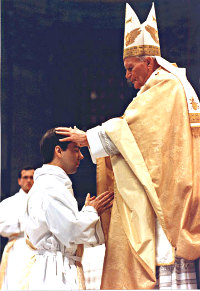
Of the 7 sacraments, Confirmation, Eucharist, Reconciliation, and Anointing the Sick require a priest with faculties to administer. Only a bishop may administer Holy Orders (ordain a priest or, with the permission of the pope, another bishop).

Christ Himself created His Church and gave her authority. That authority has been passed by the Apostles, the initial recipients of this authority, in an unbroken chain to today’s bishops. We refer to this as Apostolic succession. Faculties are legal instruments under cannon law that grant permission to ordained priests to perform certain actions such as administering certain sacraments. Priests and deacons receive faculties from their bishop (and at his pleasure, may be removed).

There are only three levels of Holy Orders: deacon, priest and bishop. All bishops are first priests and all priests are first deacons. Faculties increase from one level to the next. Only bishops have full faculties, priests generally have the faculties of bishops except Holy Orders (ordination) and deacons generally have the faculties of priests outside of acting in persona Christi.

Deacons can hatch, match and dispatch (sometimes referred to as carried, married and buried). Those are not the formal terms, of course! Deacons can baptize, assist at / witness marriages and perform funerals. They are also ordinary ministers of Holy Communion and can preach the Gospel.

Baptizing, if done with intent in the proper form, can be done by anybody in extraordinary circumstances. That includes non-Catholics and even non-Christians. The Church therefore recognizes the baptisms of other Christian communities, properly performed. We see their baptism as sacramental, even if they do not. Although they are not in full communion with us, through their baptism they join us in the Communion of Saints, the Church Militant, the Body of Christ.

Likewise, when two baptized people validly (per the Church, not the state) marry each other, their marriage is sacramental. The Church also recognizes the validity of proper (per the Church, not the state) non-sacramental marriages (e.g. one or both parties are unbaptized). BTW, I stress “per the Church, not the state” because sadly, the state and secular society in general increasingly have little idea what marriage is.

The validity of marriage is a big topic that I will save for a future post.

The body

The Body

A few weeks ago I explored the nature of the soul. Created by God at our conception (or at least, very close to our conception), the human soul is never created without the body (always created at the moment of conception).

This is the difference between us and angels. Angels are pure spirits. They never had and never will (as far as we know) have bodies. We do. We start life with our body, leave it upon our death and are reunited with our glorified bodies at the general resurrection.

Our resurrected body is “us,” not some different body. It is the natural “home” for our soul. It is not however, as it appeared at any point during our mortal life. There is much theology on this, but Catholic Answers apologist Father Vincent Serpa explains it succinctly:

The Church teaches that at the resurrection the bodies of the just will be re-modeled and transfigured to the pattern of the risen Christ. Like his body, our resurrected bodies will be those of a person in his prime. They will be incapable of suffering. They will have a spiritual nature – not that they will be pure spirit, but they will be like that of Jesus, who could penetrate closed doors after he had risen. They will have a new agility in that they will be able to obey the soul with great ease and speed – so that when the spirit is willing, the flesh will no longer be weak! Our bodies will be free from all deformity and will reflect God’s beauty to the degree that our souls do.

Our souls are unique and so is our body. Both are a gift from God. In our mortal state, each body has unique, lifelong DNA from the moment of conception. It is intertwined with and tightly united to our soul. It is the physical temple of the Holy Spirit, belonging to Christ and not our own to use or abuse however we please.

Proper respect for our body means we will care for it as best we are able (hygiene, healthcare, nutrition, exercise, etc.). Likewise, our body is not a sexual playground. We are to live modest, chaste lives – sharing the gift of our body with no one other than a spouse.

Finally, when our mortal body dies, dignity and respect must continue. It must be buried or interred within a mausoleum. Cremation is permissible, but under no circumstance may remains be scattered, turned into jewelry or the like.

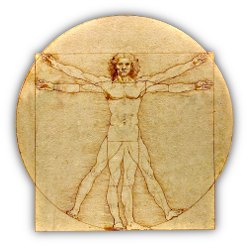
The human body shares in the dignity of “the image of God”: it is a human body precisely because it is animated by a spiritual soul, and it is the whole human person that is intended to become, in the body of Christ, a temple of the Spirit:

Man, though made of body and soul, is a unity. Through his very bodily condition he sums up in himself the elements of the material world. Through him they are thus brought to their highest perfection and can raise their voice in praise freely given to the Creator. For this reason man may not despise his bodily life. Rather he is obliged to regard his body as good and to hold it in honor since God has created it and will raise it up on the last day.

CCC 364

show